Artificial intelligence
LUMI-AI supercomputer comes to Kajaani – aiming for ten times the current AI capacity
Europe's EUR 387.8 million project will bring the next-generation LUMI-AI supercomputer, equipped with AMD accelerators, to Kajaani, Finland. Researchers and businesses are expected to gain access in the second half of 2027.
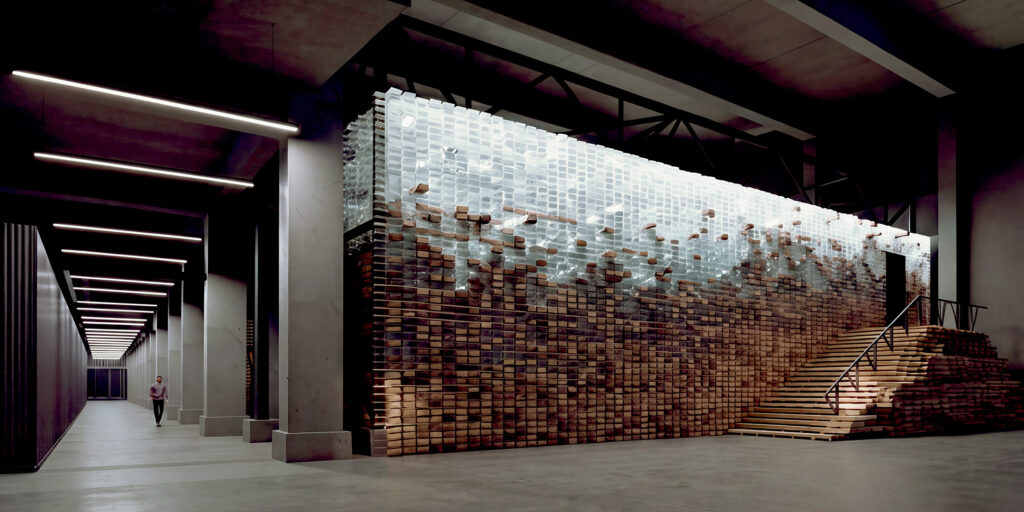
Havainnekuva Kajaanin LUMI-AI-tekoälytehtaan tulevasta datakeskuksesta. Visualisointi: NOAR – Nordic Architects / CSC. Kuva ei esitä jo valmistunutta supertietokonetta. Lähde: https://csc.fi/mediatiedote/lumi-ai-supertietokone-kymmenkertaistaa-tekoalykapasiteetin/
EUROPE'S NEXT-GENERATION AI SUPERCOMPUTER IS COMING TO KAJAANI
The Finnish city of Kajaani is set to become an increasingly important centre for European AI computing. On 31 August 2026, the European High Performance Computing Joint Undertaking (EuroHPC JU) signed a contract with the technology supplier Bull to deliver the new LUMI-AI supercomputer. The total contract value is EUR 387.8 million.
The system will be installed at the new CSC data centre in the Renforsin Ranta industrial area of Kajaani. According to the plan, computing resources should become available to users in the second half of 2027.
LUMI-AI is designed to provide up to ten times the AI computing capacity of the current LUMI supercomputer. Importantly, that ambition refers specifically to AI workloads. In conventional scientific high-performance computing, performance is expected to almost double. These are design-stage targets rather than independently measured results.
WHAT IS LUMI-AI, AND HOW WILL IT DIFFER FROM THE CURRENT LUMI?
LUMI, launched in 2022, is a supercomputer designed for a broad range of scientific high-performance computing tasks. Its applications include research simulations and AI model training. Its most powerful computing partition has 11,912 AMD Instinct MI250X GPU accelerators.
The upcoming LUMI-AI will be built around next-generation components and workflows tailored particularly to AI. It is neither an ordinary standalone computer nor a large language model. Instead, it combines thousands of computing units with memory, high-speed networks and storage systems. Together they can train and run large AI models and support large-scale simulations.
The exact number of GPU accelerators in the new system has not been confirmed in public procurement announcements. The promise of ten times the AI capacity therefore does not mean that its hardware will contain ten times LUMI's 11,912 accelerators.
NEXT-GENERATION AMD HARDWARE AND BULL'S SYSTEM ARCHITECTURE
LUMI-AI will use Bull's liquid-cooled BullSequana XH3500 architecture. The primary AI processing will run on AMD Instinct MI430X accelerators, together with sixth-generation AMD EPYC server processors planned with 256 cores.
GPU accelerators are particularly effective at the large numbers of parallel mathematical operations used to train language models. CPUs manage numerous tasks involving system control, data processing and parallel computation.
But peak chip performance alone does not determine the efficiency of a supercomputer. Data must move rapidly among the computing nodes. Nokia is involved in delivering the data-centre network, and IBM will supply storage based on IBM Storage Scale. Bull's BXI interconnect links the computing resources.
Using AMD continues the hardware approach of the current LUMI, but it does not mean AMD is superior to competitors for every AI task. Actual performance depends on the workload, software compatibility, memory capacity and network traffic.
WHAT COULD SUCH AN AI SUPERCOMPUTER DO?
Intended uses of LUMI-AI include training and running large AI models, scientific research and applications that rely on massive datasets.
Examples of potential uses are developing language models for Finnish and other European languages, studying drug compounds and molecules, optimizing industrial processes, and training robotics and computer-vision systems. These are illustrative applications, not a list of projects already running on LUMI-AI.
The supercomputer will be the central computing platform of the LUMI AI Factory. The 'AI factory' is a service ecosystem that brings together computing capacity, data resources, training and expert support. It is not a factory that physically manufactures AI products.
CAN A SMALL FINNISH BUSINESS USE LUMI-AI?
That is one of the aims. The project is intended to serve research organisations as well as European startups and small and medium-sized enterprises (SMEs). LUMI AI Factory services have already been available ahead of the new supercomputer, using the existing LUMI system.
They include computing-resource packages, access to data resources and guidance from AI specialists. Eligible startups and SMEs may receive some research, development and innovation services free of charge. However, capacity is finite and access is not automatic.
Applicants generally need to describe their project's objective, technical feasibility and resource requirements. According to the LUMI AI Factory's eligibility rules, individuals and informal temporary groups generally cannot apply for services intended for companies. Large enterprises have separate paid or collaborative options.
EUROPEAN FUNDING – SIX COUNTRIES INVOLVED
The EUR 387.8 million budget covers procurement, delivery, installation and maintenance. EuroHPC JU finances half, while the other half comes from the six-country LUMI AI Factory consortium: Finland, Czechia, Denmark, Estonia, Norway and Poland.
EuroHPC JU owns the system, and access to computing capacity will be managed through European and national allocation schemes. The availability of capacity for Finnish users therefore does not mean Finland alone will control the whole machine.
A FORMER PAPER-MACHINE HALL BECOMES A DATA CENTRE
The data centre is being built on the site of a former paper mill at Renforsin Ranta in Kajaani. CSC said in September 2026 that a former paper-machine hall roughly 200 metres long was being converted for the new supercomputer and the separate LUMI-IQ quantum computer. Construction began in January 2026.
LUMI-AI is planned to run on renewable energy. Heat from its liquid cooling is to be recovered and used in Kajaani's district-heating network, following the example of the existing LUMI.
LUMI-IQ will be a separate experimental quantum-computing environment integrated with LUMI-AI. The goal is to investigate whether conventional simulations, AI and quantum algorithms can complement one another in some research tasks. This does not mean that a quantum computer will replace conventional GPU accelerators.
THE PROMPT ANALYSIS: THE VALUE OF AI COMES FROM USE, NOT HARDWARE ALONE
LUMI-AI's economic and technological significance will ultimately depend on how effectively companies and researchers gain access to its computing capacity. A publicly supported supercomputer could significantly lower the barrier to training proprietary models or processing datasets too large for ordinary workstations.
However, competitiveness does not automatically follow from building a data centre. It also requires skilled people, useful datasets, successful research and companies capable of turning computing resources into working products and services.
Real access for users will be another decisive factor. Software interfaces, allocation procedures, cybersecurity, compatibility and expert guidance will determine whether the benefits reach smaller organisations as well as major research groups.
LUMI-AI is not yet an operational machine setting world records. It is a commissioned system under construction. Its real contribution to European AI capability can only be assessed after deployment and experience with practical applications.
SOURCES AND FURTHER READING
EuroHPC JU, procurement contract, 31 August 2026: https://www.eurohpc-ju.europa.eu/eurohpc-ju-signs-contract-deploy-lumi-ai-supercomputer-2026-08-31_en
CSC, LUMI-AI supercomputer will increase AI capacity tenfold, 31 August 2026: https://csc.fi/mediatiedote/lumi-ai-supertietokone-kymmenkertaistaa-tekoalykapasiteetin/
AMD, LUMI-AI hardware announcement, 31 August 2026: https://newsroom.amd.com/news/amd-instinct-gpus-epyc-cpus-power-lumi-ai-supercomputer/
CSC, LUMI-AI data-centre construction update, 3 September 2026: https://csc.fi/en/news/lumi-ai-factory-data-center-construction-progresses-in-kajaani/
LUMI AI Factory, pricing and eligibility: https://lumi-ai-factory.eu/pricing-and-eligibility/